

- Share
SORCE Insights: Realized Tariff Impacts on Fourth District Firms
The Cleveland Fed’s Survey of Regional Conditions and Expectations (SORCE) fielded from May 7 through May 14, 2026, included a set of special questions focused mainly on the impacts of tariffs imposed under the International Emergency Economic Powers Act (IEEPA) from February 4, 2025, through February 20, 2026. This District Data Brief discusses the top-line results from these questions.


The views authors express in District Data Briefs are theirs and not necessarily those of the Federal Reserve Bank of Cleveland or the Board of Governors of the Federal Reserve System. The series editor is Harrison Markel.
The Cleveland Fed’s latest edition of the Survey of Regional Conditions and Expectations (SORCE), administered from May 7 through May 14, 2026, included a set of special questions alongside the standard question set that informs the SORCE indexes. These special questions focused mainly on the impacts of tariffs imposed under the International Emergency Economic Powers Act (IEEPA) from February 4, 2025, through February 20, 2026. Firms were also asked about the primary issues impacting their economic outlooks and how their staffing level expectations had changed since the start of 2026.
Expected and Realized Tariff Impacts
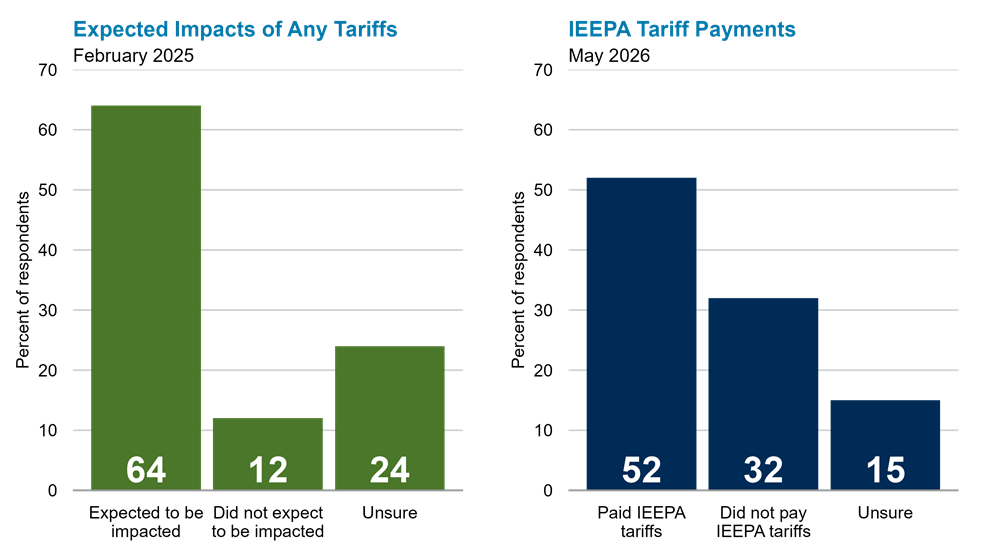
In February 2025, we asked if firms expected to be impacted by higher tariffs. At that time, 64 percent expected to be impacted, while a combined 36 percent did not expect to be impacted or were unsure (left panel below). In May 2026, 52 percent of firms reported having paid IEEPA tariffs, 32 percent reported not having paid them, and 15 percent were unsure (right panel below).
Source: Cleveland Fed SORCE
Question 1 (February 2025): Would tariffs on imports impact your business? (n = 144)
Question 2 (May 2026): How was your business affected by tariffs instituted under the International Emergency Economic Powers Act (IEEPA)? (n = 169)
Notes: Totals may not sum to 100 because of rounding. “Paid IEEPA tariffs” includes firms that paid either directly (to the government), indirectly (through surcharges or higher prices from suppliers), or both directly and indirectly.
Realized Tariff Impacts by Mode of Payment
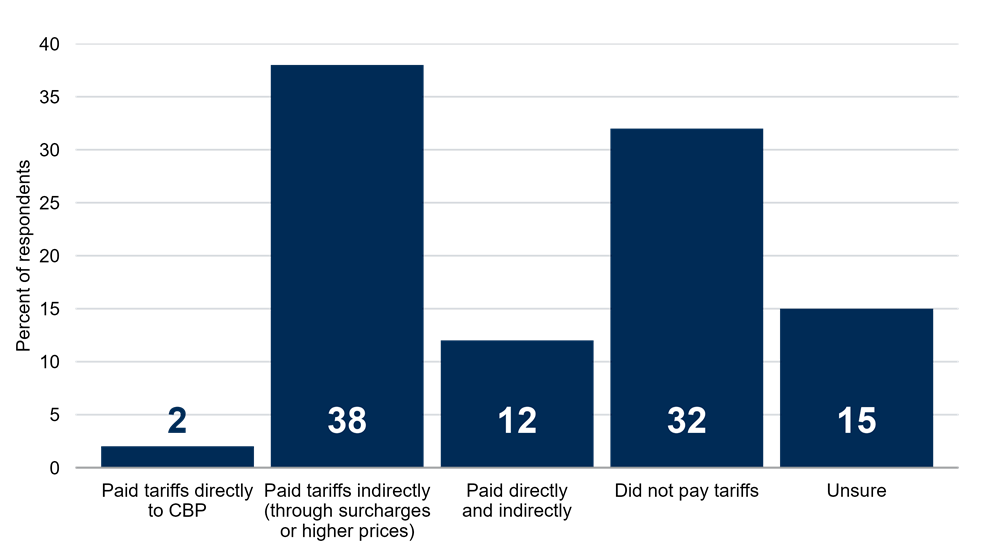
Two percent of firms reported having paid IEEPA tariffs directly to Customs and Border Protection (CBP). Meanwhile, 38 percent reported having paid indirectly, either through tariff-related surcharges or higher prices from their suppliers. Twelve percent reported having paid the tariffs both directly and indirectly.
Source: Cleveland Fed SORCE
Question: How was your business affected by tariffs instituted under the International Emergency Economic Powers Act (IEEPA)? (n = 169)
Note: Totals may not sum to 100 because of rounding.
Actions Taken in Pursuit of Tariff Refunds
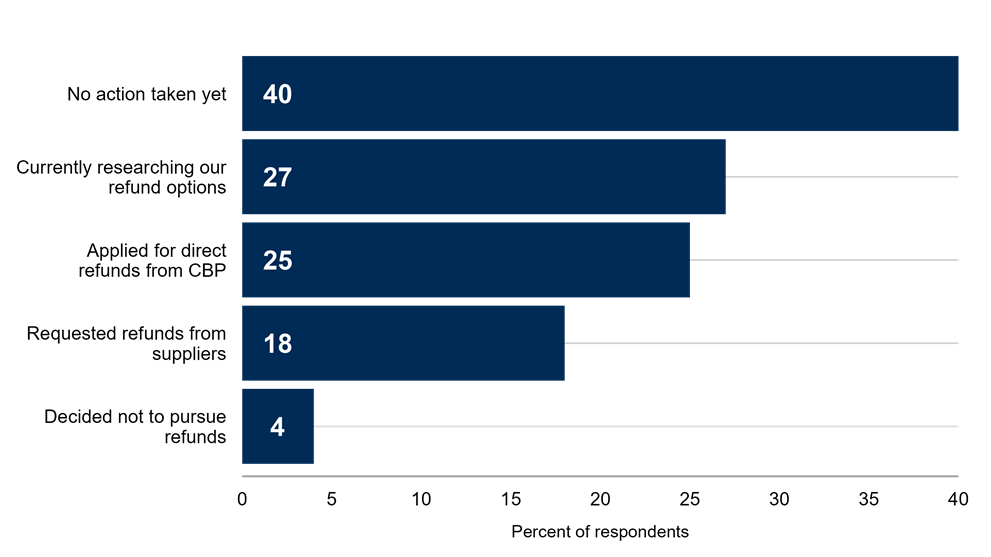
Among the firms that reported having paid IEEPA tariffs, 25 percent had sought refunds directly from CBP, 18 percent had requested refunds from their suppliers, and 27 percent were researching their refund options. Forty percent of firms had yet to take any action regarding tariff refunds, and 4 percent elected not to pursue refunds.
Source: Cleveland Fed SORCE
Question: What actions, if any, have you taken to pursue a refund for tariffs paid? Select all that apply. (n = 89)
Note: Four percent of respondents selected “Other.”
Firms’ Awareness of Supplier Refund Requests
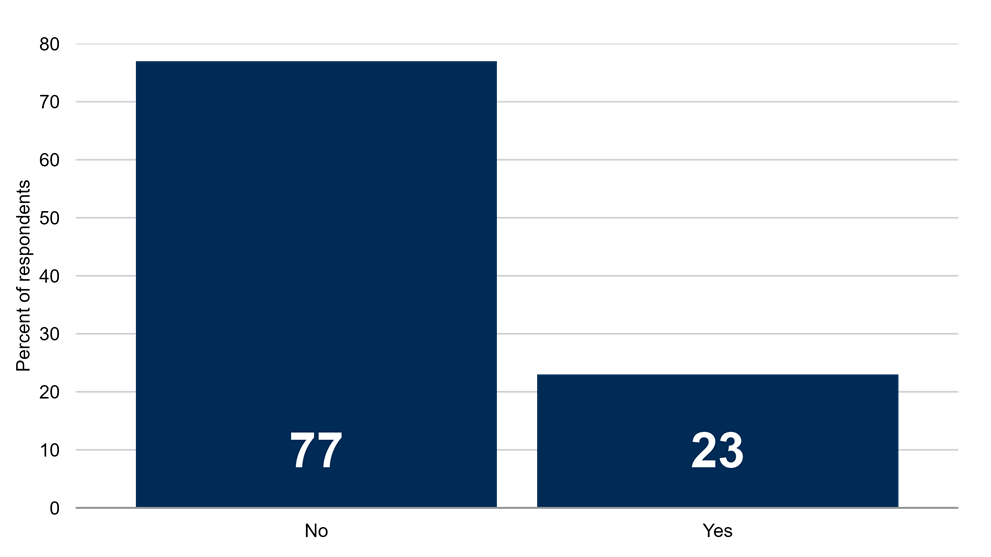
Of the firms that reported having paid IEEPA tariffs, 77 percent did not know if their suppliers were pursuing tariff refunds, while 23 percent had received notice that their suppliers were pursuing refunds.
Source: Cleveland Fed SORCE
Question: Have you received notice from your suppliers that they are pursuing a refund? (n = 87)
Primary Issues Affecting Economic Outlook
Firms were also asked to choose up to three primary concerns around their outlooks over the next six months; they most frequently selected geopolitical uncertainty. The next most frequently cited concerns were nonlabor input costs and domestic policy uncertainty, followed by weakening customer demand.
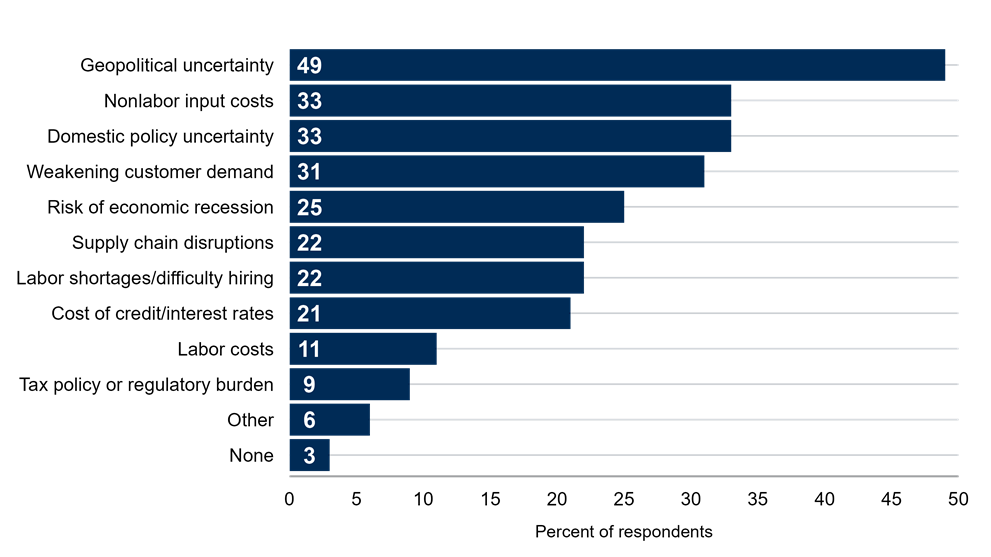
Source: Cleveland Fed SORCE
Question: What are the primary concerns around your firm’s outlook over the next six months, if any? Please select up to three. (n = 169)
Changes in Expected Staffing Levels
Asked how their projections for staffing levels had changed since the start of 2026, 64 percent of firms reported no change in expectations. Twenty percent said their expectations for staffing levels had increased since the start of the year, while 16 percent said their expectations had decreased.
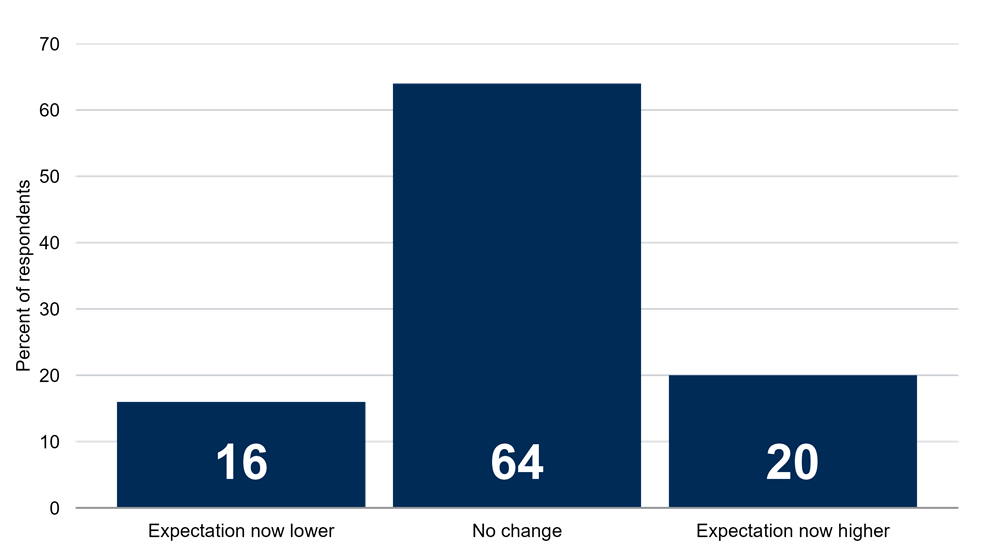
Source: Cleveland Fed SORCE
Question: Since the start of the year, have you made any adjustments to your projections for staffing levels? (n = 167)
The Cleveland Fed’s Research Department gathers and analyzes timely economic information from businesses and community contacts to inform our Beige Book contribution and to prepare for Federal Open Market Committee (FOMC) meetings. One way we obtain this information is through the Survey of Regional Conditions and Expectations (SORCE), a business conditions survey sent to firms across the Fourth District, which comprises Ohio, western Pennsylvania, eastern Kentucky, and the northern panhandle of West Virginia. The SORCE is administered eight times per year. In addition to the set of standard questions asked during each round of the survey, the Cleveland Fed routinely asks a set of “special questions” to explore timely issues that may be impacting businesses across the Fourth District. The SORCE Insights District Data Briefs share the results from the “special questions.” For more information on SORCE, visit https://clevelandfed.org/SORCE.
Suggested Citation
Huettner, Brett, and Mitchell Isler. 2026. “SORCE Insights: Realized Tariff Impacts on Fourth District Firms.” Federal Reserve Bank of Cleveland, Cleveland Fed District Data Brief. https://doi.org/10.26509/frbc-ddb-20260601
This work by Federal Reserve Bank of Cleveland is licensed under Creative Commons Attribution-NonCommercial 4.0 International


Related resources

Survey of Regional Conditions and Expectations (SORCE)
SORCE indexes are based on our survey of business and community leaders and provide a timely summary of economic activity in our region, which includes all of Ohio and parts of Pennsylvania, Kentucky, and West Virginia. Released twice each quarter.

Regional Data, Analysis, and Engagement
Explore economic trends and the circumstances impacting the economy and diverse communities of the Federal Reserve’s Fourth District, which includes all of Ohio, western Pennsylvania, eastern Kentucky, and the northern panhandle of West Virginia.

About Us
The Federal Reserve Bank of Cleveland (commonly known as the Cleveland Fed) is part of the Federal Reserve System, the central bank of the United States.