
- Share

About Us
Supporting a strong and resilient economy for all
Who we serve
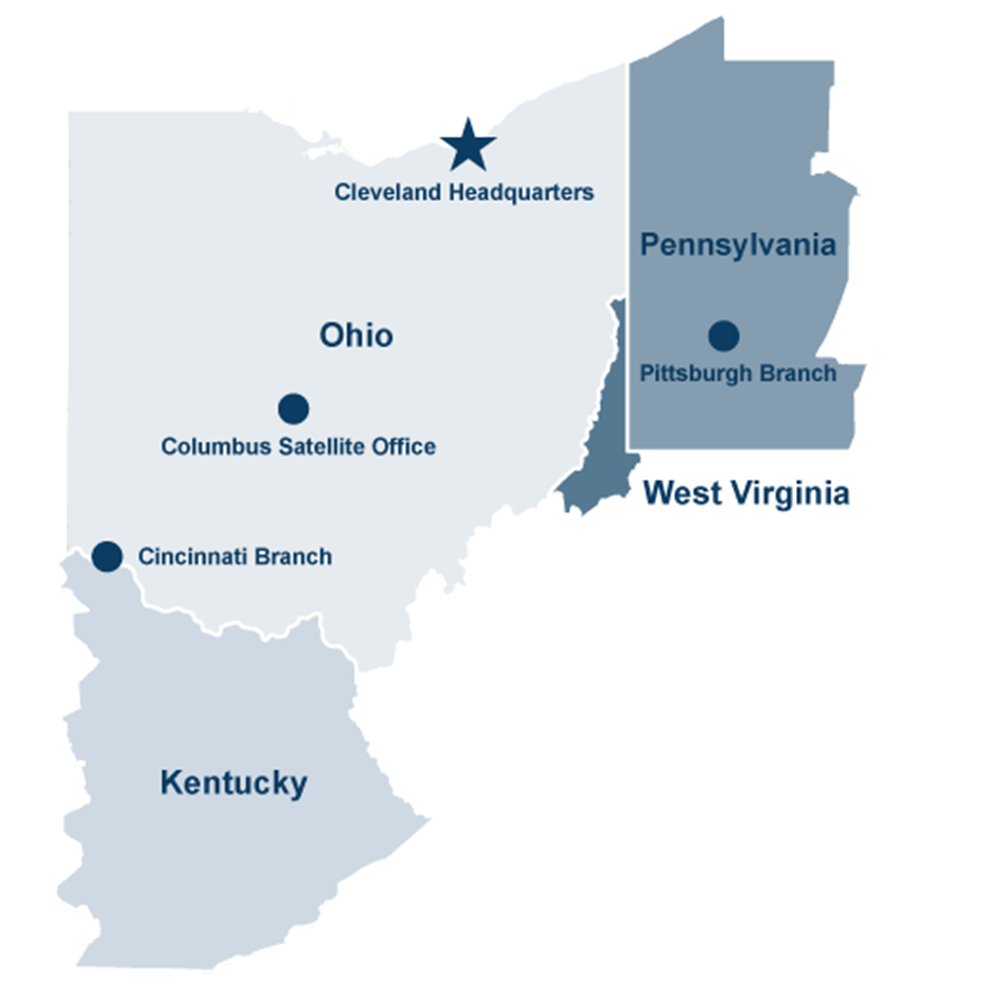
The Federal Reserve Bank of Cleveland is part of the central bank of the United States. We serve 17.3 million people in the Fourth District, a nearly 74,000-square-mile area that includes all of Ohio, western Pennsylvania, eastern Kentucky, and the northern panhandle of West Virginia.
Our District ranges from the hills and mountains of Appalachia to the eastern edge of the Midwest plains, with a diverse economy that has evolved beyond its roots in agriculture and manufacturing and now features growing healthcare and education sectors.
We’re headquartered in Cleveland, with branch offices in Pittsburgh and Cincinnati and a satellite office in Columbus.
What we do
Our work covers five key areas:
- monetary policy
- payments
- supervision
- financial stability
- consumer protection and community development
Monetary policy
We contribute to monetary policy decisions with the aim of meeting our Congressionally assigned goals of maximum employment, stable prices, and moderate long-term interest rates.
Monetary policy influences short-term interest rates, which impact the cost and availability of borrowing and lending money through mortgage rates, credit card rates, and returns on savings accounts. Changes in interest rates ripple through the economy and speed up or slow down economic activity. This affects the labor market and inflation and helps us make progress toward our goals.

Payments
We distribute currency and coin to more than 1,300 financial institutions, maintain accounts that enable payments transactions for commercial banks and their customers, and provide payments services to government agencies on behalf of the US Department of the Treasury.
Our Cash Services unit works to ensure that banks have enough bills and coins to meet public demand. We collaborate with the Systemwide Federal Reserve Financial Services team to support the nation’s digital payments infrastructure, and we facilitate payments to federal agencies. If you’ve ever applied for a passport, made a payment on a federal student loan, or bought a souvenir in a national park gift shop, you’ve touched applications designed, developed, and managed by the Cleveland Fed’s Treasury Services Department.
Supervision
We ensure that banks and other financial institutions operate in a safe and sound manner, provide fair access to credit, and comply with laws, regulations, and mandates.
Effective supervision means you can confidently use banks for everyday transactions, savings, and borrowing without worrying about institutional failure or fraud.


Financial stability
We monitor risks in the financial system, provide emergency funding when markets freeze, and enforce regulations to promote resilience so that banks and other financial institutions can withstand economic downturns.
Maintaining financial stability is a core component of the Federal Reserve’s mission. All of our other key functions depend on it: ensuring a safe and sound banking system, promoting an efficient payments system, supporting consumer protection and community development, and meeting our monetary policy objectives of maximum employment, stable prices, and moderate long-term interest rates.
Consumer protection and community development
We conduct research about communities and consumers from all economic backgrounds to better understand local conditions and identify opportunities for increased economic participation. We highlight programs and practices that work, with the goal of more effectively promoting economic vitality.
We connect consumers to information and tools to combat fraud, promote fair access to credit, and support economic mobility in low- and moderate-income communities as part of our commitment to a strong and resilient economy that works for all.

How we fit into the Federal Reserve System
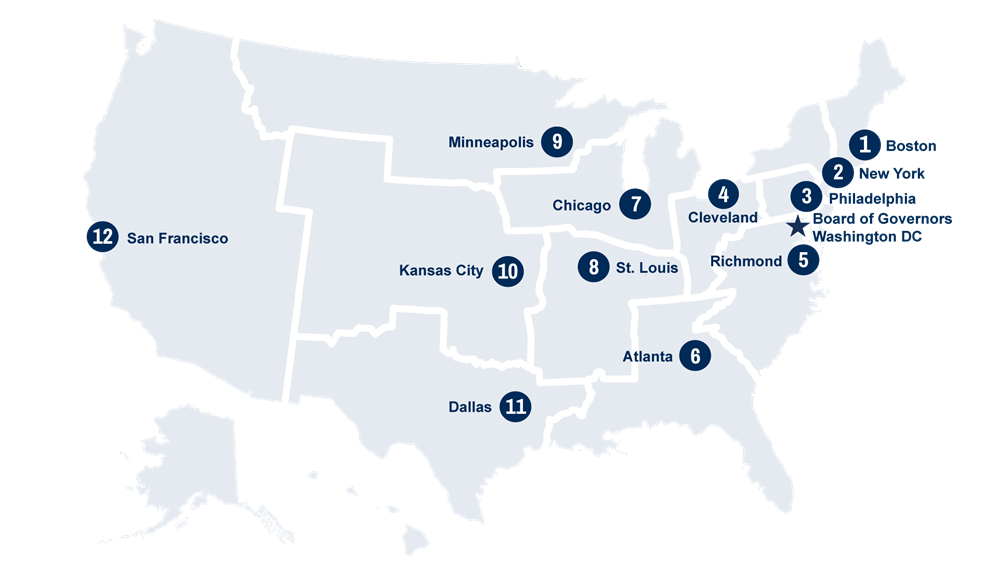
We’re one of 12 Reserve Banks set up by Congress in 1913 to create a decentralized central bank: a System comprising these Reserve Banks and a Board of Governors in Washington DC rather than a single entity on Wall Street or in Washington.
The idea was to avoid concentrating power in those traditional financial centers. Our decentralized structure has the added advantage of enabling every Reserve Bank president to bring their District’s unique perspective and on-the-ground insights into discussions about setting monetary policy.
More about us
News and Events
View news and events from the Federal Reserve Bank of Cleveland.
Publications
Read the Federal Reserve Bank of Cleveland’s work, including research and analysis, speeches, and educational content.
President and CEO
Learn about the work of Beth M. Hammack, president and CEO of the Federal Reserve Bank of Cleveland.