Brent Meyer |

Economic Analyst


Brent Meyer, Economic Analyst

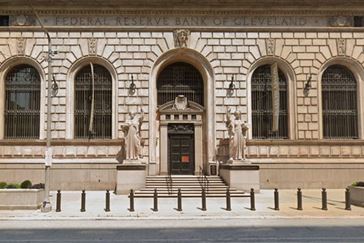
Brent Meyer is a senior economic analyst in the Research Department of the Federal Reserve Bank of Cleveland. His research interests are monetary policy, macroeconomics, inflation, and forecasting.

Mr. Meyer joined the Bank in 2006 as a research assistant and was promoted to economic analyst in 2007. He earned a bachelor’s degree in economics from Hillsdale College and a master’s degree in economics from Bowling Green State University.

  • Fed Publications
Title Date Publication Author(s) Type
Economic Projections from the June FOMC Meeting


July, 2010 Brent Meyer; Economic Trends
Abstract: Four times a year, we get a glimpse of the FOMC’s forecasts for economic growth, unemployment, and inflation. The Committee's latest forecasts were released with the minutes of the June 22-23 meeting.

top
Getting a Clear Signal on Inflation


June, 2010 Brent Meyer; Economic Trends
Abstract: From time to time, components comprising the Consumer Price Index exhibit some idiosyncratic price changes, obscuring the inflation signal in the data. Recently, a couple of examples of these idiosyncratic price changes have shown up in the data. There are a number of ways to deal with these idiosyncracies to get a better read on the inflation signal in prices, with trimmed-mean estimators like the median CPI among the best.

top
Economic Projections from the April FOMC Meeting


May, 2010 Brent Meyer; Economic Trends
Abstract: The economic projections of the Federal Open Market Committee (FOMC) were released along with the minutes of the meeting on April 27-28. As usual, the projections were based on the information available at the time, as well as participants’ assumptions about the economic factors affecting the outlook and their view of appropriate monetary policy.

top
Are Some Prices in the CPI More Forward Looking than Others? We Think So.


May, 2010 Brent Meyer; Michael F Bryan; Economic Commentary
Abstract: Some of the items that make up the Consumer Price Index change prices frequently, while others are slow to change. We explore whether these two sets of prices—sticky and flexible—provide insight on different aspects of the inflation process. We find that sticky prices appear to incorporate expectations about future inflation to a greater degree than prices that change on a frequent basis, while flexible prices respond more powerfully to economic conditions—economic slack. Importantly, our sticky-price measure seems to contain a component of inflation expectations, and that component may be useful when trying to gauge where inflation is heading.

top
Prices are Falling, Prices are Falling!


April, 2010 Brent Meyer; Economic Trends
Abstract: Given the recent low readings on inflation, it wouldn’t be too surprising to hear warnings of an impending deflation. But is there cause for alarm? A quick examination of the incoming data may help to discern whether it’s time to panic.

top
January Price Statistics or the Definition of "Subdued"


March, 2010 Brent Meyer; Economic Trends
Abstract: The most recent readings in the median CPI, 16 percent trimmed-mean CPI, and core CPI are all below their respective longer-term trends, suggesting a continued disinflationary trend. The longer-term trends in the trim and median have come down sharply relative to the core CPI over the past year or so.

top
Economic Projections from the January FOMC Meeting


February, 2010 Brent Meyer; Economic Trends
Abstract: The economic projections of the Federal Open Market Committee (FOMC) are released in conjunction with the minutes of the meetings four times a year (January, April, June, and November). Data available to FOMC participants on January 26–27 continued to confirm that the economy was in the midst of a nascent recovery, albeit at a pace that is expected to be somewhat slower than an average snapback.

top
December Price Statistics


January, 2010 Brent Meyer; Economic Trends
Abstract: The CPI rose at an annualized rate of 1.6 percent in December, as both food and energy prices posted modest increases. In December, the bulk of the consumer market basket (by expenditure weight) continued to reside on the low end of the distribution, as 40 percent of the overall index posted outright price decreases and 23 percent rose at rates between 0 and 1 percent. Roughly half of the overall increase in the core CPI in December was due to a 35 percent increase in used car and truck prices. Although there was a slight uptick in both the short-term and longer-run average inflation expectations from the University of Michigan’s Survey of Consumer Sentiment, they still appear to be relatively “well-anchored.”

top
November Price Statistics


December, 2009 Brent Meyer; Economic Trends
Abstract: The CPI rose 4.9 percent (annualized rate) in November, largely on a sizeable jump in energy prices (up 62.7 percent). However, the core CPI was virtually unchanged, rising just 0.4 percent, following a 2.2 percent increase in October. The Federal Reserve Bank of Cleveland’s measures of underlying inflation trends—the median CPI and 16 percent trimmed-mean CPI—remained soft in November, increasing a slight 0.2 percent and 1.4 percent, respectively. Over the past three months, the median CPI is up a mere 0.6 percent, while the trimmed-mean measure has risen 1.5 percent.

top
Economic Projections from the November FOMC Meeting


November, 2009 Brent Meyer; Economic Trends
Abstract: The FOMC’s economic projections were released in conjunction with the minutes of its November meeting. The Committee?s central tendency for economic growth is now for the economy to contract on a year-over-year basis in 2009 between -0.4 percent and -0.1 percent, a dramatic improvement when compared to the central tendency reported after the June FOMC meeting. Estimates for PCE inflation for 2009 were broadly similar to those in June, and unemployment is expected to average between 9.8 percent and 10.3 percent in the fourth quarter of this year.

top
October Price Statistics


November, 2009 Brent Meyer; Economic Trends
Abstract: The CPI rose at an annualized rate of 2.0 percent in September, following an energy-price-induced 5.5 percent jump in August, and is now up 2.5 percent over the past three months. The BLS release states that the overall increase was “broad based” among components and tempered by a 1.2 percent decrease in food prices (their sixth decrease in the past eight months).

top
September Price Statistics


October, 2009 Brent Meyer; Economic Trends
Abstract: Reading the headline inflation forecasts from the most recent Blue Chip survey is much like the reading the story of Goldilocks and the Three Bears. The average of the bottom 10 forecasts has inflation running “much too cold”—below 1.0 percent by the end of 2010. At the other end, the average of the top 10 has it rising above 3.0 percent by the fourth quarter of 2010—some might call that “too hot.” However, the overall average hits 2.0 percent by the end of next year, which some might argue is “just right.”

top
August Price Statistics


September, 2009 Brent Meyer; Economic Trends
Abstract: The CPI jumped up 5.5 percent, while the 12-month growth rate in the series is down 1.5 percent. The core CPI (excluding food and energy prices) rose 0.8 percent in August. Also, there were a couple rather curious price moves during the month.

top
Real GDP: Second-Quarter 2009 Revised Estimate


August, 2009 Brent Meyer; John Lindner; Economic Trends
Abstract: Real GDP was virtually unchanged in the latest revision of the second-quarter estimate, falling at an annualized rate of −1.0 percent. While the headline number was unchanged, there were some interesting moves in the components. In related news, results from two special questions on the Blue Chip survey of professional economists lend support to the view that this recovery will be slower than postwar trends would suggest.

top
July Price Statistics


August, 2009 Brent Meyer; Economic Trends
Abstract:

The CPI was virtually unchanged in July, rising at an annualized rate of only 0.1 percent, as slight decreases in food and energy components were roughly balanced out by a 1.1 percent increase in the core CPI.


top
Real GDP: Second-Quarter 2009 Advance Estimate and Comprehensive Benchmark Revision


August, 2009 Brent Meyer; Economic Trends
Abstract: Real GDP decreased at an annualized rate of 1.0 percent in the second quarter,beating expectations. Due to the comprehensive revision, year-over-year growth in real GDP fell to −3.9 percent through the second quarter, a post-World War II low. The comprehensive revision incorporated methodological changes, which, along with data revisions, resulted in some very interesting developments.

top
June Price Statistics


July, 2009 Brent Meyer; Economic Trends
Abstract: The CPI jumped up 9.3 percent, almost entirely because of a large spike in motor fuel (up 569 percent at an annualized rate), accounting for over 80 percent of the overall increase in the CPI. However, even with this month’s jump, the CPI is down 1.4 percent over the past year.

top
Economic Projections from the June FOMC Meeting


July, 2009 Brent Meyer; Economic Trends
Abstract: The FOMC’s economic projections were released in conjunction with the minutes of its June meeting. Data available to FOMC participants on June 23-24 showed some signs of stabilization after two quarters of substantial decreases.

top
Real GDP: First-Quarter 2009 Final Estimate


July, 2009 Brent Meyer; Economic Trends
Abstract: The final estimate for real GDP growth in the first quarter of 2009 came in at −5.5 percent, 0.2 percentage point above the preliminary estimate and 0.6 percentage point higher than the advance estimate. A downward revision to real imports (which adds to real GDP growth) was the largest change from the previous estimate, adding 0.5 percentage point to real GDP growth.

top
May Price Statistics


June, 2009 Brent Meyer; Economic Trends
Abstract: The CPI rose at an annualized rate of 1.2 percent in May, rebounding somewhat after two consecutive overall decreases. Still, its 12-month growth rate slipped even further into the red, falling from −0.7 percent in April to −1.3 percent in May.

top
Real GDP: First-Quarter 2009 Preliminary Estimate


June, 2009 Brent Meyer; Economic Trends
Abstract: First-quarter real GDP growth was revised up from an annualized percent change of −6.1 percent in the advance estimate to −5.7 percent, according to the preliminary estimate released by the Bureau of Economic Analysis (BEA). Most of the revisions to the components that comprise GDP were relatively minor.

top
April Price Statistics


May, 2009 Brent Meyer; Economic Trends
Abstract: The CPI was virtually flat in April, falling 0.2 percent at an annualized rate, pulled down in part by falling food and energy prices, which were down 2.2 percent and 25.1 percent, respectively. Excluding food and energy prices (core CPI), the index jumped up 3.1 percent. As was the case in March, the excise tax on tobacco was the smoking gun pushing up the core CPI.

top
Economic Projections from the April FOMC Meeting


May, 2009 Brent Meyer; Economic Trends
Abstract: The FOMC's economic projections were released in conjunction with the minutes of its April meeting. The projections have not improved much since the last release of the Committee's projections, in January 2009.

top
How Realistic Were the Economic Forecasts Used in the Stress Tests?


May, 2009 Brent Meyer; Kenneth Beauchemin; Economic Trends
Abstract: Some observers complain that the economic forecasts used in the bank stress tests were not severe enough. But the most recent projections by professional forecasters suggest that the stress-test scenarios remain viable and relevant to the task of assessing the potential losses faced by nation's largest bank holding companies.

top
Real GDP: First-Quarter 2009 Advance Estimate


May, 2009 Brent Meyer; Economic Trends
Abstract: Real GDP decreased at an annualized rate of 6.1 percent in the first quarter of 2009, slightly less negative than the fourth quarter’s −6.3 percent, but coming in worse than consensus expectations. The resulting four-quarter growth rate in real GDP fell to −2.6 percent, its lowest growth rate since the 1982 recession.

top
March Price Statistics


April, 2009 Brent Meyer; Economic Trends
Abstract: The CPI decreased at an annualized rate of 1.6 percent in March, pulling the 12-month growth rate down to −0.4 percent. The core CPI is up 2.2 percent over the past three months, compared to 1.8 percent over the past year. The measures of underlying inflation produced by the Federal Reserve Bank of Cleveland, the median CPI and the 16 percent trimmed-mean CPI, rose 2.0 percent and 0.4 percent, respectively.

top
Real GDP: Fourth-Quarter 2008 Final Estimate


March, 2009 Brent Meyer; Economic Trends
Abstract: The final estimate of real GDP in the fourth quarter of 2008 came in at −6.3 percent (annualized rate), 0.1 percentage points lower than the preliminary estimate and whopping 2.5 percentage points below the advance estimate.

top
February Price Statistics


March, 2009 Brent Meyer; Economic Trends
Abstract: The CPI increased somewhat unexpectedly in February, rising at an annualized rate of 4.8 percent, following a 3.4 percent gain last month. The Federal Reserve Bank of Cleveland’s measures of underlying inflation trends, the median CPI and the 16-percent trimmed-mean CPI, rose 2.3 percent and 2.5 percent, respectively. Also, every subcategory of the apparel price index (except infant and toddler apparel) rose in excess of 8.0 percent during the month, which may suggest that some retail prices are starting to rebound after deeper-than-normal discounts over the holiday season. Given the relatively weak spending environment, its seems hard to view these price changes as anything other than transitory.

top
Real GDP: Fourth-Quarter 2008 Preliminary Estimate


March, 2009 Brent Meyer; Economic Trends
Abstract: Real GDP was revised down 2.5 percentage points to −6.2 percent (annualized rate) in the fourth quarter of 2008, according to the preliminary release by the Bureau of Economic Analysis. For context, the average revision without regard to sign from the advance to preliminary estimate is 0.5 percentage point. If the current estimate holds, it will be the sharpest quarterly decrease between the two releases since the first quarter of 1982.

top
January Price Statistics


February, 2009 Brent Meyer; Economic Trends
Abstract: The CPI rose at an annualized rate of 3.4 percent in January, reversing course after three consecutive monthly declines and outpacing all of its longer-term trends. The Federal Reserve Bank of Cleveland’s measures of underlying inflation trends, the median CPI and the 16 percent trimmed-mean CPI, increased 2.7 percent and 2.0 percent, respectively.

top
Economic Projections from the January FOMC Meeting


February, 2009 Brent Meyer; Economic Trends
Abstract: The economic projections of the FOMC are released in conjunction with the meeting minutes four times a year (January, April, June, and October). Economic conditions between the release of the October and January projections have deteriorated considerably.

top
Real GDP: Fourth-Quarter 2008 Advance Estimate


February, 2009 Brent Meyer; Economic Trends
Abstract: Real GDP decreased at an annualized rate of 3.8 percent in the fourth quarter of 2008. While this marks the statistic’s worst quarterly performance since 1982, it is much less than the −5.5 percent that was expected.

top
December Price Statistics


January, 2009 Brent Meyer; Economic Trends
Abstract: After posting a decline of 8.5 percent (annualized rate) in December, the CPI finished the year up only 0.1 percent on a year-over-year basis, its lowest yearly price appreciation since 1945. As expected, plummeting energy prices (namely a 17 percent slide (nonannualized) in gas prices) caused much of the headline decrease in December.

top
Real GDP: Third-Quarter Final Estimate


January, 2009 Brent Meyer; Economic Trends
Abstract: Real GDP decreased at an annualized rate of 0.5 percent in the third quarter of 2008 (unchanged from the preliminary estimate), according to the final estimate released by the Bureau of Economic Analysis. The latest Blue Chip consensus forecast is for real GDP to drop 4.1 percent in the fourth quarter of 2008, marking the economy’s worst performance since the 1982 recession. It seems that the 2009 outlook has darkened considerably, as nearly every panelist revised down his or her respective 2009 growth estimate from the last report. The 2009 consensus estimate fell from −0.4 percent in November to −1.1 percent in December.

top
November Price Statistics


December, 2008 Brent Meyer; Economic Trends
Abstract: The CPI fell further than expected, posting a record decrease of −18.4 percent (annualized rate) in November. Rapidly falling energy prices (down 89.3 percent at an annualized rate), accounted for a large part of the decrease. Outside of energy prices, there was a rather curious uptick in owners’ equivalent rent (OER)—it increased 3.4 percent in November.

top
GDP: Third-Quarter Preliminary Estimate


December, 2008 Brent Meyer; Economic Trends
Abstract: Third-quarter real GDP was revised down 0.2 percentage point, to −0.5 percent, according to the preliminary estimate released by the Bureau of Economic Analysis. The downward revision, which was largely anticipated, reflected downward adjustments to personal consumption and exports, which were somewhat offset by an upward adjustment to inventories, and a downward revision to imports.

top
October Price Statistics


November, 2008 Brent Meyer; Economic Trends
Abstract: The Consumer Price Index decreased at an annualized rate of 10.9 percent in October. It was the largest monthly decrease on record in the series (which goes back to 1947), conjuring the specter of deflation just four short months after inflation looked to be a major concern.

top
GDP: Third-Quarter Advance Estimate


November, 2008 Brent Meyer; Economic Trends
Abstract: Real GDP decreased at an annualized rate of 0.3 percent in the third quarter, slightly above expectations. Much of the decrease was due to a dramatic drop in consumption and a decrease in investments. Personal consumption expenditures decreased 3.1 percent in the third quarter, their largest decrease since the second quarter of 1980. Even worse, spending on nondurable goods fell 6.5 percent during the quarter, its largest decrease since the fourth quarter of 1950.

top
September Price Statistics


October, 2008 Brent Meyer; Economic Trends
Abstract: The Consumer Price Index was virtually unchanged in September, falling just 0.4 percent at an annualized rate. Over the past couple of months, the median CPI has remained stubbornly elevated (falling only slightly), while the 16 percent trimmed–mean CPI has fallen dramatically from July’s 7.2 percent increase. This disparity between the median CPI and the 16 percent trimmed–mean has a lot to do with the majority of the index’s components falling in the tails of the distribution.

top
Second-Quarter GDP, Final Revision


October, 2008 Brent Meyer; Economic Trends
Abstract: Real GDP advanced at an annualized rate of 2.8 percent in the second quarter, according to the final release from the Bureau of Economic Analysis. This is a downward revision of 0.5 percentage point from the preliminary estimate, but it is still up 0.9 percentage point from the advance estimate. The downward adjustment (from preliminary to final) was largely due to a revision to real consumption growth, from an increase of 1.7 percent to 1.2 percent.

top
August Price Statistics


September, 2008 Brent Meyer; Economic Trends
Abstract: The Consumer Price Index (CPI) fell for the first time since October 2006, declining at an annualized rate of 1.6 percent in August. In August, 30 percent of the components of the CPI exhibited price decreases, while 22.5 percent experienced increases at rates exceeding 5.0 percent (so a majority of the index’s components fell into the tails of the distribution).

top
Second-Quarter GDP Preliminary Revision: Onward and Upward?


September, 2008 Brent Meyer; Economic Trends
Abstract: Real GDP advanced at an annualized rate of 3.3 percent in the second quarter, outpacing its growth over the past four quarters, according to the preliminary release from the BEA. This is an extremely large upward revision (1.4 percentage points) from the advance estimate when compared to the average advance–to–preliminary revision over the past 20 years of 0.5 percentage point. If this estimate holds, the economy will have grown in the second quarter at a rate in excess of its average over the past 20 years (not bad for a quarter that, not too long ago, was expected to post near–zero growth).

top
The Yield Curve, August 2008


August, 2008 Brent Meyer; Michael F Bryan; Kent Cherny; Joseph G Haubrich; Economic Trends
Abstract: Since last month, the yield curve has flattened modestly, with both short-term interest rates increasing and longer rates holding steady. The yield curve slope became somewhat flatter, with short rates moving up, and the spread remains positive. Projecting forward using past values of the spread and GDP growth suggests that real GDP will grow at about a 3.0 percent rate over the next year.

top
July Price Statistics


August, 2008 Brent Meyer; Michael F Bryan; Economic Trends
Abstract: The CPI rose at an annualized rate of 10.3 percent in July, much higher than expected, as energy and commodity prices continued to surge. One-year-ahead average inflation expectations fell 0.8 percentage point to 5.5 percent in August, likely reflecting the recent decline in energy and commodity prices from near–term peaks. Longer–term (5–10 year–ahead) average expectations ticked up to 3.8 percent in August from 3.5 percent in July, holding slightly above their recent trend.

top
Real GDP: Second–Quarter Advance Estimate and Benchmark Revisions


August, 2008 Brent Meyer; Economic Trends
Abstract: Real GDP increased at an annualized rate of 1.9 percent in the second quarter of 2008, according to the advance estimate released by the BEA, 0.1 percentage point higher than its growth over the last four quarters. The revision to the fourth quarter of 2007, from 0.6 percent to −0.2 percent, garnered far more interest and renewed some recession speculation.

top
June Price Statistics


July, 2008 Brent Meyer; Michael F Bryan; Economic Trends
Abstract: The CPI rose at an annualized rate of 13.4 percent in June, outpacing all of its longer-term trends and pushed up by a 116.3 percent spike in energy prices and a 9.6 percent increase in food prices. Over the past 12 months, the PPI has increased 9.1 percent, its largest growth rate in 27 years. Average inflation expectations, as measured by the University of Michigan’s Survey of Consumers, have been holding near recent highs.

top
First Quarter Real GDP: Final Estimate


July, 2008 Brent Meyer; Economic Trends
Abstract: Real GDP increased at an annualized rate of 1.0 percent in the first quarter of 2008, according to the final estimate released by the BEA. The revision was primarily due to upward adjustments to private investment and exports, which were mostly offset by a downward adjustment to inventories and an increase in imports (which enter as a negative in GDP accounting).

top
May Price Statistics


July, 2008 Brent Meyer; Michael F Bryan; Economic Trends
Abstract: The CPI rose 8.1 percent (annualized rate) in May, pushed up, in part, by a 67.8 percent increase in energy components. Over the past three months, the CPI is up 4.9 percent. Looking forward, professional forecasts see headline consumer prices remaining elevated throughout the rest of 2008 and falling to 2.4 percent by the end of 2009.

top
Real GDP First-Quarter 2008 Preliminary Estimate


June, 2008 Brent Meyer; Economic Trends
Abstract: The BEA’s preliminary estimate of first-quarter real GDP growth was revised up a bit from the advance release (to 0.9 percent at an annualized rate). The Blue Chip consensus economic forecast is predicting that the economy will grow a shade above zero next quarter, before snapping back in the third quarter and rising to near trend growth by the end of 2009.

top
April Price Statistics


May, 2008 Brent Meyer; Michael F Bryan; Economic Trends
Abstract: The CPI rose at an annualized rate of 2.5 percent in April, following a 4.2 percent increase in March. Over the past six months, the CPI has risen 4.5 percent (annualized rate). In contrast to the rather well-behaved headline and core price indexes, the median and 16 percent trimmed-mean CPI measures rose 2.9 percent and 2.7 percent, respectively.

top
Real GDP 2008:Q1 Advance Estimate


May, 2008 Brent Meyer; Economic Trends
Abstract: Real GDP grew at an annualized rate of 0.6 percent in the first quarter of 2008, the same growth rate as last quarter, according to the advance release by the BEA. Over the past four quarters, real GDP has increased 2.5 percent, slightly below its long term (30-year) average of 3.0 percent. Growth in the first quarter was primarily due to increases in exports and private inventories, which were partly offset by a decrease in private investment and an increase in imports (which subtract from real GDP).

top
March Price Statistics


May, 2008 Brent Meyer; Economic Trends
Abstract: The Consumer Price Index (CPI) rose at an annualized rate of 4.2 percent in March, returning to its recent elevated trend after a respite in February, when it increased only 0.3 percent (annualized rate). The CPI is up 4.6 percent over the past six months.

top
Real GDP: Fourth-Quarter 2007 Final Estimate


March, 2008 Brent Meyer; Economic Trends
Abstract: Real GDP, according to the final estimate by the Bureau of Economic Analysis (BEA), was unchanged from both the preliminary and advance estimates, rising at an annualized rate of 0.6 percent in the fourth quarter. While the overall growth rate in GDP remained identical to the advance estimate, the performance of its underlying components changed.

top
February Price Statistics


March, 2008 Brent Meyer; Michael F Bryan; Economic Trends
Abstract: The (CPI) was virtually unchanged from January, rising only 0.3 percent at an annualized rate in February. This moderation from increases of 4.8 percent in January and 4.4 percent in December resulted from a modest increase in food prices, which was offset by a decrease in energy prices, and a slowdown in price appreciation among all items less food and energy.

top
January Price Statistics


March, 2008 Brent Meyer; Michael F Bryan; Economic Trends

top
Real GDP 2007: Fourth-Quarter Preliminary Estimate


March, 2008 Brent Meyer; Economic Trends

top
December Price Statistics


February, 2008 Brent Meyer; Michael F Bryan; Economic Trends

top
Real GDP Fourth-Quarter 2007 Advance Estimate


February, 2008 Brent Meyer; Economic Trends

top
November Price Statistics


January, 2008 Brent Meyer; Michael F Bryan; Economic Trends

top
Third-Quarter 2007 Final GDP


December, 2007 Brent Meyer; Economic Trends

top
Third-Quarter Preliminary GDP Release


December, 2007 Brent Meyer; Economic Trends

top
October Price Statistics


November, 2007 Brent Meyer; Michael F Bryan; Economic Trends

top
September Price Statistics


November, 2007 Brent Meyer; Michael F Bryan; Economic Trends

top
Third-Quarter GDP


November, 2007 Brent Meyer; Economic Trends

top
August Price Statistics


September, 2007 Brent Meyer; Michael F Bryan; Economic Trends

top
July Price Statistics


September, 2007 Brent Meyer; Michael F Bryan; Economic Trends

top
Real GDP: Preliminary Estimate


September, 2007 Brent Meyer; Paul W Bauer; Economic Trends

top
Peak Oil


August, 2007 Federal Reserve Bank of Cleveland, Economic Commentary Brent Meyer; Joseph G Haubrich; Economic Commentary
Abstract: When will the world's production of oil peak, and what will the economic consequences be? Calculating when turns out not to be so straightforward as it seems, but predicting the likely economic consequences is-and they're not as bleak as many fear.

top
June Price Statistics


August, 2007 Brent Meyer; Michael F Bryan; Economic Trends

top
The Advance Real GDP Report


August, 2007 Brent Meyer; Timothy Dunne; Economic Trends

top
The Yield Curve, July 2007


July, 2007 Brent Meyer; Joseph G Haubrich; Economic Trends

top
The Yield Curve, June 2007


June, 2007 Brent Meyer; Joseph G Haubrich; Economic Trends

top
Technology Investment


May, 2007 Brent Meyer; Timothy Dunne; Economic Trends

top
The Yield Curve, May 2007


May, 2007 Brent Meyer; Joseph G Haubrich; Economic Trends

top
Employment Flows and Firm Size


May, 2007 Brent Meyer; Timothy Dunne; Economic Trends

top
Real GDP Growth


May, 2007 Brent Meyer; David E Altig; Economic Trends

top
The Yield Curve, April 2007


April, 2007 Brent Meyer; Joseph G Haubrich; Economic Trends

top
Subprime Statistics


April, 2007 Brent Meyer; Timothy Dunne; Economic Trends

top
Household Wealth and Consumption


March, 2007 Brent Meyer; David E Altig; Economic Trends

top
Construction Activity and Employment


March, 2007 Brent Meyer; Timothy Dunne; Economic Trends

top
A Mixed Message on Manufacturing


March, 2007 Brent Meyer; Timothy Dunne; Economic Trends

top
Job Creation and Job Destruction


February, 2007 Brent Meyer; Timothy Dunne; Economic Trends

top
The Yield Curve, February 2007


February, 2007 Brent Meyer; Joseph G Haubrich; Economic Trends

top
The Budget and Economic Outlook


February, 2007 Brent Meyer; David E Altig; Economic Trends

top
Employment Cost Index


February, 2007 Brent Meyer; Timothy Dunne; Economic Trends

top
High-Technology Manufacturing


January, 2007 Brent Meyer; Timothy Dunne; Economic Trends

top
New Cities Added to Case-Shiller Home Price Indices


January, 2007 Brent Meyer; David E Altig; Economic Trends

top
The Yield Curve, January 2007


January, 2007 Brent Meyer; Joseph G Haubrich; Economic Trends

top
Housing


January, 2007 Brent Meyer; David E Altig; Economic Trends

top
Revisions to Real GDP


January, 2007 Brent Meyer; David E Altig; Economic Trends

top
The Yield Curve, December 2006


January, 2007 Brent Meyer; Joseph G Haubrich; Economic Trends

top